
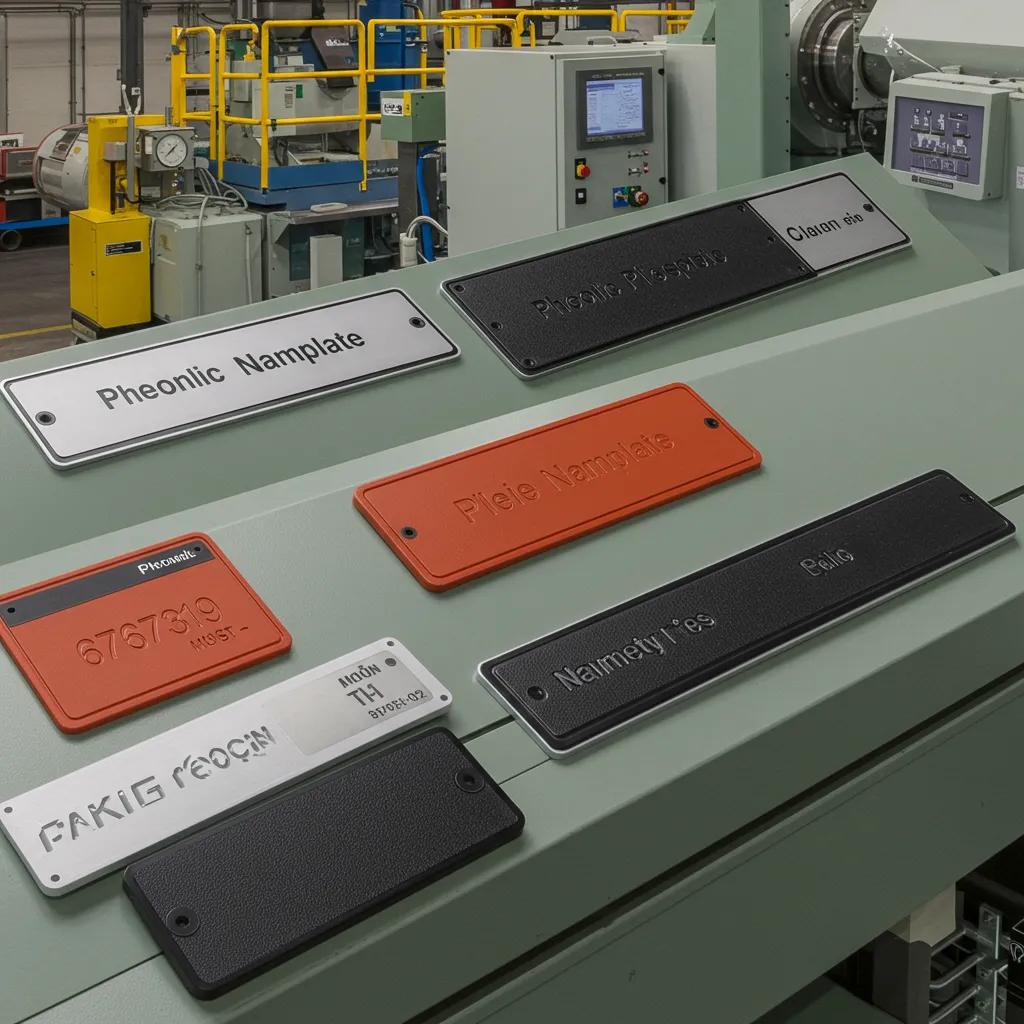
Unrivaled Durability: Why Phenolic Plastic Nameplates Lead the Pack for Industrial Identification
Phenolic plastic nameplates offer unmatched dependability, fusing layers of thermoset resin into a robust laminate engineered to withstand mechanical and environmental challenges from the outset. Embark Printing’s expertly engraved phenolic labels embody this resilience, providing industrial professionals with a clear identification solution that remains legible even in extreme conditions. This guide delves into why phenolic nameplates surpass their metal and acrylic counterparts, explores their resistance to chemicals and heat, emphasizes their crucial electrical non-conductivity, details their versatile customization capabilities, outlines their long-term cost advantages and compliance benefits, and surveys their key applications across various industries. Each section aims to build a comprehensive understanding of how businesses can harness the power of phenolic plastic nameplates to boost safety, enhance operational efficiency, and minimize maintenance expenditures.
Why Phenolic Plastic Nameplates Reign Supreme in Durability for Industrial Settings
Phenolic plastic nameplates are meticulously crafted from phenol-formaldehyde resin, which cures into a hard, cross-linked polymer. This process imparts structural integrity that ensures longevity, even in demanding industrial environments, for decades. The thermoset construction effectively resists deformation under pressure and prevents delamination when subjected to vibration or impact, guaranteeing that markings stay intact and readable year after year. Grasping these material advantages clearly illustrates why phenolic laminates have become the benchmark for critical equipment labeling.
What Material Characteristics Grant Phenolic Nameplates Their Exceptional Longevity?
Phenolic labels are constructed from multiple layers of kraft paper or fabric, thoroughly impregnated with phenolic resin and then subjected to intense heat and pressure. This creates a dense, compact laminate boasting exceptional tensile strength. This rigid matrix is inherently resistant to cracking and maintains its dimensional stability under stress. Consequently, phenolic nameplates can endure bending, flexing, and torsion without any compromise to the substrate, preserving engraved information throughout the label’s entire service life.
How Do Phenolic Labels Stand Up Against Abrasion, Impact, and General Wear?
Phenolic nameplates effectively resist surface abrasion and gouging thanks to a dense polymer network that expertly distributes mechanical forces across numerous resin-impregnated layers.
- They withstand repeated contact from tools and cleaning implements without any surface degradation.
- Their impact resistance prevents chipping or cracking, even when struck by flying debris.
- The inherent hardness of the laminate’s surface ensures that engraved details remain clear despite rigorous use.
This superior abrasion resistance significantly extends the operational lifespan of the labels and reduces costly downtime associated with replacements.
How Does Phenolic Durability Measure Up Against Metal and Acrylic Labels?
Phenolic laminates consistently outperform both metal and acrylic labels when subjected to typical industrial stressors, as illustrated below:
Phenolic nameplates offer a significantly longer service life when exposed to mechanical and chemical challenges, setting the stage for our discussion on their resistance to chemicals and heat.
How Do Phenolic Nameplates Deliver Superior Resistance to Chemicals and Heat?
Phenolic plastic nameplates exhibit remarkable chemical inertness and thermal stability. This is due to the cured phenolic resin matrix, which forms exceptionally strong molecular bonds that effectively block solvent penetration and prevent polymer breakdown. This inherent structural resilience ensures that the labels resist discoloration, swelling, and loss of adhesion, even when exposed to aggressive cleaning agents and elevated temperatures. Recognizing this dual resistance capability highlights the ideal suitability of phenolic materials for demanding processing environments.
What Range of Chemicals and Solvents Are Phenolic Labels Resistant To?
Phenolic laminates maintain their integrity when in contact with:
- Common mineral oils and lubricants used in routine machinery maintenance
- Acids such as hydrofluoric and sulfuric acids, frequently employed in chemical processing
- Solvents including acetone, ethanol, and methyl ethyl ketone
- Alkaline cleaners and detergents utilized for equipment sanitation
This extensive chemical resistance significantly minimizes the risk of label failure in corrosive operational settings.
What Is the Operational Temperature Range for Phenolic Plastic Nameplates?
Phenolic nameplates are designed to withstand continuous service temperatures ranging from –40 °C up to 150 °C, with the capacity for short-term exposure to temperatures as high as 200 °C. The thermoset resin network effectively resists softening or creeping at elevated temperatures, while specialized low brittle-point additives ensure that impact strength is maintained even in sub-zero conditions.
This broad temperature tolerance guarantees stable, reliable performance in applications ranging from industrial ovens and freezers to engine compartments.
How Do Chemical and Heat Resistance Attributes Benefit Industrial Applications?
The exceptional thermal and chemical resilience of phenolic nameplates ensures permanent, reliable equipment identification in demanding environments such as manufacturing lines, petrochemical plants, and outdoor installations. Facilities utilizing these labels experience significantly fewer instances of label failure, thereby preventing misidentification that could lead to costly process delays or critical maintenance errors. By consistently maintaining clarity under aggressive conditions, phenolic nameplates enhance operational efficiency and bolster compliance with essential safety regulations, naturally leading us to explore their electrical insulation benefits.
How Do Phenolic Plastic Nameplates Elevate Electrical Safety Through Non-Conductivity?
Phenolic plastic nameplates are inherently non-conductive, a critical feature stemming from the fact that phenolic resin is an outstanding electrical insulator. This property effectively blocks electrical current flow, thereby preventing short circuits when the labels are mounted on live equipment. This crucial insulation characteristic ensures that identification labels do not inadvertently create electrical pathways, safeguarding both personnel and machinery. Highlighting this feature underscores the role of phenolic nameplates as indispensable safety components within electrical systems.
Why Is Electrical Insulation a Paramount Requirement for Industrial Nameplates?
Effective electrical insulation is vital for preventing conductive labels from bridging electrical contacts or terminals, which could otherwise trigger dangerous arcs or ground faults. Phenolic laminates boast a high dielectric strength, often exceeding 1,000 V/mil, ensuring that their barrier integrity is maintained even under significant voltage stress. By reliably avoiding unintended conductivity, phenolic tags substantially reduce the risk of equipment damage and worker injury in energized environments.
What Are the Common Electrical Applications Where Phenolic Labels Excel?
Phenolic nameplates play a crucial role in identifying and labeling:
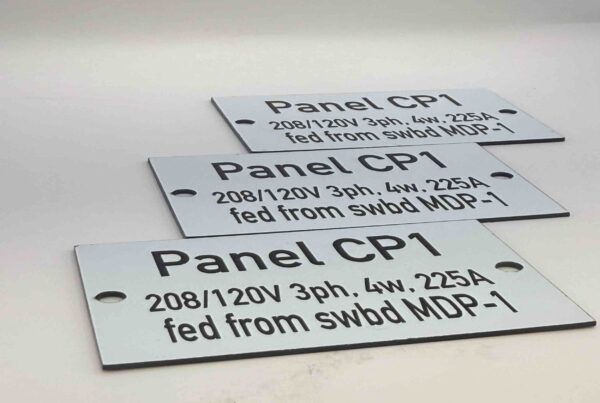
- Electrical panels and distribution boards, clearly marking circuits and breakers
- Switchgear enclosures, where precise voltage and function markings are essential
- Control boxes and relay cabinets, requiring durable, non-conductive identification
These specific applications clearly demonstrate how phenolic insulation actively supports regulatory compliance and promotes a safer working environment.
How Do Phenolic Nameplates Contribute to Preventing Electrical Workplace Injuries?
By providing clear, permanent identification on live equipment without conducting electricity, phenolic nameplates significantly help technicians and electricians avoid accidental contact with energized components. Research indicates that the implementation of proper labeling practices can reduce electrical incidents by as much as 30 percent. Phenolic insulation aligns perfectly with OSHA and NEC requirements for durable electrical signage and actively contributes to fostering a safer work environment, naturally leading us to the topic of customization possibilities.
What Customization Options Are Available for Phenolic Nameplates to Precisely Meet Business Needs?

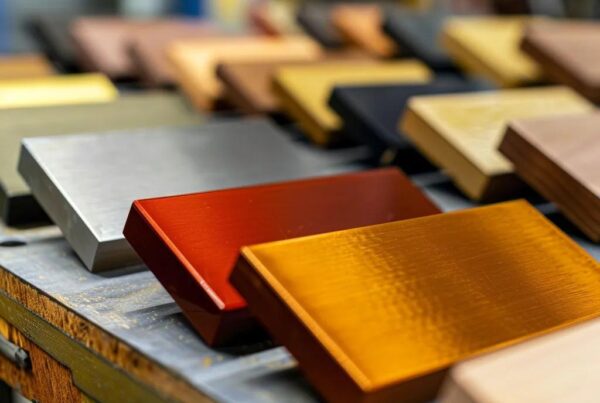
Phenolic laminates offer remarkable adaptability, allowing for customization in color, thickness, and shape to perfectly align with specific branding and functional requirements. Embark Printing provides custom engraving services on phenolic sheets available in multiple distinct colors—including black, white, red, and yellow—enabling the creation of high-contrast markings that seamlessly match corporate identity standards. This level of flexibility ensures that every nameplate precisely meets both aesthetic and practical specifications.
How Can Businesses Tailor Colors, Sizes, and Shapes of Phenolic Labels?
Phenolic sheets are readily available in thicknesses ranging from 0.5 mm to 6 mm. They can be precisely die-cut or water-jet profiled into standard shapes like rectangles and circles, or custom-designed into unique, bespoke forms. Color laminates featuring contrasting core materials allow for effective two-tone engraving, significantly enhancing visibility. Businesses have the flexibility to select specific sheet dimensions and edge profiles to ensure seamless integration with equipment panels or asset tags.
What Engraving Techniques Guarantee Clear and Enduring Markings?
Advanced techniques such as deep engraving and laser etching produce exceptionally crisp characters by precisely removing surface resin layers to reveal contrasting core materials. This meticulous process yields high-definition text and symbols that are highly resistant to fading, even when subjected to harsh UV radiation, chemicals, or abrasive contact. The outcome is permanent, highly legible identification that consistently meets stringent industrial readability standards.
What Mounting Solutions Are Offered for Industrial Phenolic Nameplates?
Phenolic nameplates can be securely affixed using high-performance pressure-sensitive adhesives specifically rated for extreme temperatures. Alternatively, they can be drilled and fastened with rivets or screws, or installed using durable nylon cable ties passed through pre-punched holes. These versatile mounting options are designed to accommodate flat, curved, or irregular surfaces, ensuring stable and reliable attachment. This adaptability guarantees that labels remain firmly in place throughout the equipment’s service life, smoothly transitioning us to the important topic of cost considerations.
How Do Phenolic Nameplates Deliver Exceptional Long-Term Cost-Effectiveness and Ensure Compliance?
Investing in phenolic nameplates significantly reduces the need for frequent replacements and minimizes associated maintenance labor, delivering a clear and measurable return on investment. The extended lifespan of phenolic laminates directly translates to less downtime caused by label failures and supports more accurate asset tracking. When the initial material cost is weighed against the extended service life, phenolic solutions demonstrably outperform less durable alternatives in terms of total cost of ownership.
How Does Superior Durability Translate to Reduced Replacement and Maintenance Expenses?
Phenolic’s inherent resistance to wear and environmental degradation effectively prevents the cracking, peeling, or fading that often necessitates premature relabeling. Many facilities report experiencing up to a 50 percent reduction in label replacements over a five-year period when compared to acrylic labels. Furthermore, the reduction in inspection and re-engraving tasks frees up valuable maintenance team resources, allowing them to concentrate on core operational duties and amplifying overall productivity gains.
Which Key Industry Standards Do Phenolic Labels Consistently Comply With?
Phenolic nameplates reliably meet or exceed critical requirements set forth by leading organizations, including OSHA for safety signage, NEC for electrical identification, MIL-SPEC for military-grade durability, ANSI for industrial labeling standards, UL ratings for material safety, and ISO guidelines for traceability. Consistent conformance with these rigorous standards ensures legal compliance and significantly reinforces operational credibility.
How Does Adherence to Compliance Standards Enhance Business Safety and Operational Efficiency?
Strict adherence to industry labeling regulations effectively mitigates potential liability, ensures readiness for audits, and boosts worker confidence in equipment warnings and hazard communication. The permanent nature of phenolic nameplates prevents regulatory gaps that can arise from missing or illegible tags. Consistent compliance streamlines inspection processes and cultivates a more efficient safety culture, paving the way for us to explore specific industry applications.
What Are the Primary Industrial Applications for Phenolic Plastic Nameplates?
Phenolic nameplates provide dependable identification across a wide spectrum of industries where durability and safety are absolutely non-negotiable. From bustling manufacturing floors to remote offshore platforms, these robust laminates ensure persistent, highly legible markings that are essential for effective asset management and clear hazard communication. Recognizing the extensive range of these applications underscores the vital role phenolic materials play in modern industrial operations.
How Are Phenolic Labels Effectively Utilized in Manufacturing and Chemical Processing Environments?
Within manufacturing settings, phenolic tags are used to clearly identify machinery settings, delineate production line zones, and display maintenance schedules. In chemical processing, they are indispensable for marking valves, pipelines, and storage vessels. Their exceptional resistance to acids, solvents, and high temperatures ensures that critical information remains intact, preventing the misrouting of chemicals and accidental overpressurization, thereby safeguarding process integrity.
Why Are Phenolic Nameplates the Ideal Choice for the Electrical and Aerospace Sectors?
Electrical utilities depend heavily on the insulating properties of phenolic materials to label switchgear, transformer panels, and control cabinets without introducing any risk of electrical conductivity. In the aerospace industry, lightweight phenolic laminates are employed to mark cockpit controls, wiring harnesses, and hydraulic assemblies, offering essential flame retardance and vibration resistance critical for safety-dependent applications.
How Do Facility Managers and Electricians Reap Benefits from Phenolic Identification Tags?
Facility managers gain the advantage of streamlined asset tracking and significantly reduced relabeling budgets, thanks to the exceptional longevity of phenolic nameplates. Electricians, in turn, benefit from clear, unambiguous circuit and panel designations that drastically minimize troubleshooting time. This powerful combination of superior durability, inherent non-conductivity, and regulatory compliance simplifies maintenance workflows and enhances on-site safety protocols.
What Are the Principal Advantages of Selecting Phenolic Nameplates Over Metal and Acrylic Alternatives?
Phenolic nameplates artfully combine the robust toughness of metal with the advanced chemical resistance of specialized plastics, creating a superior hybrid solution that excels precisely where purely metal or acrylic options fall short. Their well-balanced property profile makes them the definitive choice for equipment identification in environments that demand exceptional mechanical strength, unwavering chemical inertness, and reliable electrical insulation.
How Do Phenolic Labels Outperform Metal Nameplates in Challenging Environments?
Unlike metal tags, which are prone to corrosion and scratching and often require protective coatings, phenolic laminates naturally resist oxidation, remain unworn even under abrasive contact, and maintain their readability without the need for repainting. Furthermore, the inherent non-conductivity of phenolic materials eliminates the electrical hazards that metal plates can introduce, significantly enhancing safety in energized areas.
What Are the Key Benefits of Phenolic Compared to Acrylic Labels for Industrial Applications?
Acrylic labels tend to crack and yellow when exposed to UV radiation and are particularly vulnerable to solvents, whereas phenolic laminates consistently maintain their color stability and surface hardness. Phenolic’s superior heat tolerance prevents warping in demanding applications like ovens or engine compartments where acrylic would likely deform, ensuring persistent legibility and performance.
In Which Scenarios Should Businesses Prioritize Phenolic Nameplates Over Traditional Plastics?
Businesses should opt for phenolic materials over alternatives like PVC or PETG when equipment is regularly exposed to harsh chemical cleaning, significant mechanical abrasion, high-temperature cycles, or requires robust electrical insulation. Phenolic’s comprehensive performance profile effectively eliminates the need for multiple material replacements, offering a simple, single-solution approach for the most demanding industrial contexts.
Implementing permanent phenolic identification empowers businesses to maintain clear, compliant labeling across any operational environment, leading to reduced downtime and enhanced safety. To request custom engraved phenolic plastic nameplates and personally experience these significant benefits, please contact Embark Printing at phenoliclabels.net.


https://shorturl.fm/hI5uk
https://shorturl.fm/HEiUv
https://shorturl.fm/G3wRE
Its like you read my mind! You appear to know a lot about this,
like you wrote the book in it oor something.
I think that you could do with some pics to drive the message
home a littlee bit, but instead of that, this is excellent blog.
An excellent read. I will definitely be back. https://meds24.sbs/
Its like you read my mind! You appear to know a lot about this, like you wrote the book in it or something.
I think that you could do with some pics to drive the message home
a little bit, but instead of that, this is excellent blog.An excellent read.
I will definitely be back. https://meds24.sbs/
https://shorturl.fm/TbO1e
https://shorturl.fm/Wx2Dv
https://shorturl.fm/Wd2CT
https://shorturl.fm/Iz55E
https://shorturl.fm/Pk8zA
https://shorturl.fm/ZgoDU
https://shorturl.fm/lcvnP
https://shorturl.fm/NRxxp
https://shorturl.fm/Qu5z7
https://shorturl.fm/PQ97A
https://shorturl.fm/GT6y2
This book is a mirror for the social media age. You can look into it with the Yellowface PDF. It is a story about the court of public opinion. easy to download, the digital file is ready for you. https://yellowfacepdf.top/ yellowface play
https://shorturl.fm/gpG7S
https://shorturl.fm/XMgaM
https://shorturl.fm/fWJsJ
Promote our brand and get paid—enroll in our affiliate program!
Join our affiliate community and earn more—register now!
Start profiting from your traffic—sign up today!
Refer friends, earn cash—sign up now!
Be rewarded for every click—join our affiliate program today!
Your network, your earnings—apply to our affiliate program now!
Share our offers and watch your wallet grow—become an affiliate!
Статьи, личный опыт, руководства по преодолению тревоги, развитию критического мышления, гигиене информации и самопомощи.
Корпоративные программы:
Психологическая поддержка сотрудников компаний для улучшения их благополучия.
Философия: Создание поддерживающего и человечного пространства,
где забота о ментальном здоровье
становится нормой
Work-life balance как найти баланс между работой и жизнью
Promote our products and earn real money—apply today!
It’s a pity you don’t have a donate button! I’d certainly donate to this brilliant blog!
I guess for now i’ll settle for book-marking and adding your RSS feed to my Google account.
I look forward to new updates and will share this website with my Facebook group.
Chat soon!
Психолог Онлайн Бесплатно Сейчас.
Совет Онлайн. Психологическая Поддержка.
Записаться К Психотерапевту.
Сколько Стоит Психолог. Подбор Сайт.
Психотерапевты Онлайн Консультации.
Консультация Онлайн.
✔️ Ощущение пустоты и потери смысла.
✔️ Детские травмы, обиды, чувство вины.
✔️ Ощущение пустоты и потери смысла.
✔️ Профессиональное выгорание.
✔️ Депрессия.
Turn your network into income—apply to our affiliate program!
Дизайн Человека